Looking to Sell or Let?
Get started with a free property valuation today.
Property Valuation
"*" indicates required fields


With the conservation area and stunning National Trust-managed view adding an extra layer of appeal for buyers, house prices can vary significantly across Bookham.
Similar-sized houses near the A246 can come at a very different price point, for example, to those close to Box Hill. This guide will help you to understand some of the Bookham property market’s inner workings.
Bookham sits in the KT23 postcode district in the Mole Valley district of Surrey, roughly equidistant between Leatherhead and Guildford. Its appeal rests on a combination of factors that don’t all apply equally across every road: proximity to the North Downs and Bookham Commons, access to the rail station, school catchments that include well-regarded primaries and secondary options, and a conservation area that protects much of the older village core.
The village divides broadly into three pockets: the older conservation area village core to the south and west of the High Street; the post-war and inter-war residential streets spreading north and east toward the station and the A246; and the more rural fringe along the lanes toward Little Bookham and Effingham. Each has a different price profile and attracts a different type of buyer.
The roads that typically achieve the highest prices in Bookham share at least one of three characteristics: they sit within or immediately adjacent to the Great Bookham Conservation Area, they back onto or face open countryside and the commons, or they offer larger plots with original period features intact.
For flats and smaller properties, the streets closest to Bookham station on the Effingham Junction line (with direct services to London Waterloo via Epsom) are most sought-after. Naturally, walkability to the station is a sought-after feature for commuters.
| Zone | Character | Who it suits | Price indicator |
|---|---|---|---|
| Conservation area village core | Period houses, narrow lanes, church setting | Buyers prioritising character and heritage | Top of the KT23 range |
| Lower Road and common area | Detached and semi-detached, large gardens, National Trust outlook | Families, upsizers, nature-focused buyers | Upper-mid to premium |
| Station area north of High Street | Inter-war and post-war semis and detached, walkable to rail | Commuters, first-time buyers, investors | Mid-range |
| Little Bookham and rural lanes | Cottages, larger rural plots, some equestrian | Buyers seeking space and quiet over convenience | Variable, plot-dependent |
The Great Bookham Conservation Area covers the historic village centre, including the Church Street and Church Road area, along with parts of the High Street. The Little Bookham Conservation Area takes in the area around Manorhouse Lane, Rectory Lane and Little Bookham Street. Within each conservation area, permitted development rights are restricted, which limits extension and alteration works and helps preserve the surroundings. Mole Valley District Council provides conservation area maps and full details to give you an idea of what the designation actually entails.
For buyers, conservation areas can be a double-edged sword, as they guard against other residents making drastic changes but limit your own opportunities to adapt a property.
School catchments also influence buyer behaviour in family-friendly Bookham. Therfield School is the main secondary serving the village, and its catchment broadly covers Great Bookham and Fetcham. Local primary options include Bookham Primary School and The Raleigh School. Catchment boundaries can and do change, so always verify directly with Surrey County Council’s school admissions team for the current year. Families can also find private schools in and around Bookham, such as the selective independent Manor House School.
Transport proximity marks a clear split between the northern streets, within comfortable walking distance of Bookham station, and the southern and rural roads, where a car is effectively necessary for the daily commute. For buyers who commute to London, the station surroundings north of the High Street may be worth prioritising on that basis alone.
See what the streets of Bookham are like with this video walkthrough:
The roads that tend to be undervalued in Bookham are generally those just outside a sought-after spot, close enough to share similar benefits but not yet priced accordingly.
While commanding respectable house prices, The Lorne and some of the quieter cul-de-sacs off Lower Road are close to the common, without the full premium of the roads that front directly onto it. Buyers happy to walk two or three minutes rather than stepping out of the back gate to reach it, can find better value on these streets.
The streets immediately south of the High Street, around Church Street and the lanes connecting to Rectory Lane, are well-established. However, some of the smaller Victorian cottages on these roads are occasionally overlooked by buyers focused on larger detached houses alone. They offer a slice of period character and conservation area status at a more accessible price point, though you may not realise when moving from outside the village.
The Little Bookham area, along the lanes toward Effingham, is more rural in character. This is an idyllic setting for many, but it’s not to everyone’s taste, particularly for buyers without a car. Those who want to live on a Surrey lane address within larger grounds, and are happy to live a little further from the village proper, can find lower prices per square foot.
Whether any of these streets are likely to see accelerated price growth is harder to foresee. The planned development of up to 200 new homes on land north-west of Preston Farm, if it completes, will add to housing options in the northern part of the village. There’s a chance that this may keep a lid on price growth in the inter-war streets nearest to the site. However, the conservation area and streets close to the common are fairly well insulated by their scarcity and heritage.
Want to know more about Bookham? Browse our guide to Bookham property types and discover living in Bookham.
Bookham is predominantly an owner-occupier village, brimming with family houses that were bought and are lived in by their owners, and the tenure balance across most streets reflects that. Almost 48% of households own their home outright, according to ONS data covering Great Bookham and Fetcham, and a further 34% own with a mortgage or through shared ownership. The conservation area and streets closest to the common are almost entirely owner-occupied.
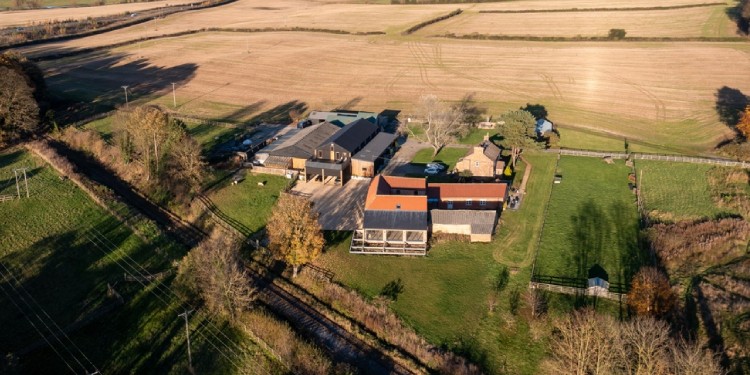
That said, there is a rental market in Bookham, often comprising commuters who are not yet buying, or are renting while they search. Just under 10% of residents rent privately, with most rentals concentrated in the streets closest to the station.
For landlords assessing buy-to-let viability, the station surroundings north of the High Street could be a practical starting-point. Rental yields in Surrey villages are generally modest compared to urban markets, but void rates on well-presented properties near the station tend to be low.
There are two development schemes particularly worth tracking if you’re considering buying in Bookham. Their effects will be felt differently depending on where in the village you’re looking, though.
The most significant is the outline planning permission for up to 200 new net zero carbon homes on land north-west of Preston Farm. This site sits on the northern edge of the village, and the development, if it proceeds, will add a not inconsiderable amount of new housing to this corner of Bookham. Each home is planned to include electric vehicle charging and cycle storage as standard. For buyers considering the inter-war streets in the northern part of the village, it’s worth taking a closer look at the site’s proximity and potential effects on traffic flows in that area once construction begins.
The new youth and community centre, benefitting from a capital allocation of £2.8 million by Surrey County Council and expected to complete in early 2027, will be located on the Lower Road Recreation Ground. It’s a positive addition for the streets closest to Lower Road, offering new facilities for local families to make the most of.
There are also proposals under discussion for 30 self-contained apartments on the former Keswick Care Home site. It’s a smaller-scale project, but worth monitoring if you’re weighing up a move to the surrounding streets.
Once you’ve identified the right pocket of Bookham for you, find out what’s available here and now. Whether you’re buying a family home near the common, targeting the station area for a buy-to-let, or looking to rent while you search, contact us to talk through what’s currently on and off market in Bookham. You can also register as a buyer or tenant to be matched with properties as they come to market.
Rectory Lane, Church Road, and the roads closest to Bookham Common are consistently amongth the most sought-after addresses in Bookham. For commuter buyers, the streets within walking distance of Bookham station, north of the High Street, offer the strongest transport access and suit those prioritising their London commute.
Part of Bookham is. The Great Bookham Conservation Area covers the historic village core around Church Street, Church Road, and St Nicolas Church, extending to parts of the High Street. Additionally, Little Bookham has its own conservation area. Properties within the conservation areas have restricted permitted development rights, which limits alterations but protects the character of the street.
The main price drivers here include conservation area status, proximity to Bookham Common, plot size, and walkability to the station. Roads that combine several of these factors tend to sit at the top of the KT23 price range, while inter-war semis further from the common and conservation area can sell at more affordable price points.
The strongest rental demand is close to the station, north of the High Street, where smaller houses and flats attract commuter tenants. Surrey village yields can generally be modest, but well-located, well-maintained properties tends to attract longer-term tenants which can result in fewer void periods. The conservation area streets are predominantly owner-occupied and less suited to buy-to-let.
Outline planning permission has been granted for up to 200 new homes north-west of Preston Farm on the northern edge of the village. Buyers considering streets in that area should factor in potential changes to traffic and the immediate surroundings. The conservation area and southern village streets are unlikely to be directly affected.
Get started with a free property valuation today.
"*" indicates required fields
If so, contact our friendly team today.
"*" indicates required fields

Choosing between a characterful Victorian cottage steps from Bookham High Street and a spacious 1930s detached house with a proper garden...
Tucked between the Surrey Hills and a direct line to London Waterloo, Bookham is the kind of village that quietly rewards those who find ...
Thames Ditton looks deceptively straightforward on a map - but two nearly identical streets can differ by hundreds of thousands of pounds...